
ABOUT

About CSCAP

At a meeting in Seoul on 1–3 November 1992, representatives of some two dozen strategic studies centres from ten countries in the Asia Pacific region (Australia, Canada, Indonesia, Japan, South Korea, Malaysia, the Philippines, Singapore, Thailand and the USA) decided that there was a need to provide a more structural regional process of a non-governmental nature, to contribute to the efforts towards regional confidence building and enhancing regional security through dialogues, consultation and cooperation.

Over the next eight months, the concept of a Council for Security Cooperation in the Asia Pacific (CSCAP) was widely canvassed among both government officials and regional security analysts, and agreement was reached to formally establish CSCAP at a meeting in Kuala Lumpur on 8 June 1993. For further details see The Kuala Lumpur Statement.

The CSCAP Charter was adopted at a meeting of the Steering Committee Pro Tem in Lombok, Indonesia, on 16 December 1993. The Charter was subsequently amended in August 1995 (see the revised CSCAP Charter).

CSCAP has been described as ‘the most ambitious proposal to date for a regularised, focused and inclusive non-governmental process on Asia Pacific security matters’. CSCAP has made considerable progress over the last couple of years. New Zealand, Russia, North Korea, Mongolia and a Western European consortium have joined as Full Members of the Council and the Indian Institute of Defence Studies and Analyses (IDSA) has become an Associate Member. The People’s Republic of China and Vietnam joined as Full Members in December 1996. The European Union joined as an Associate Member in June 1994 and was granted Full Membership in December 1998. India became an Associate Member in December 1994 and was elevated to Full Membership in June 2000. Cambodia and Papua New Guinea were also granted Full Membership in June 2000. With member committees from all the major countries in the Asia Pacific, CSCAP is now looking forward to consolidating its links to the first track ASEAN Regional Forum (ARF).
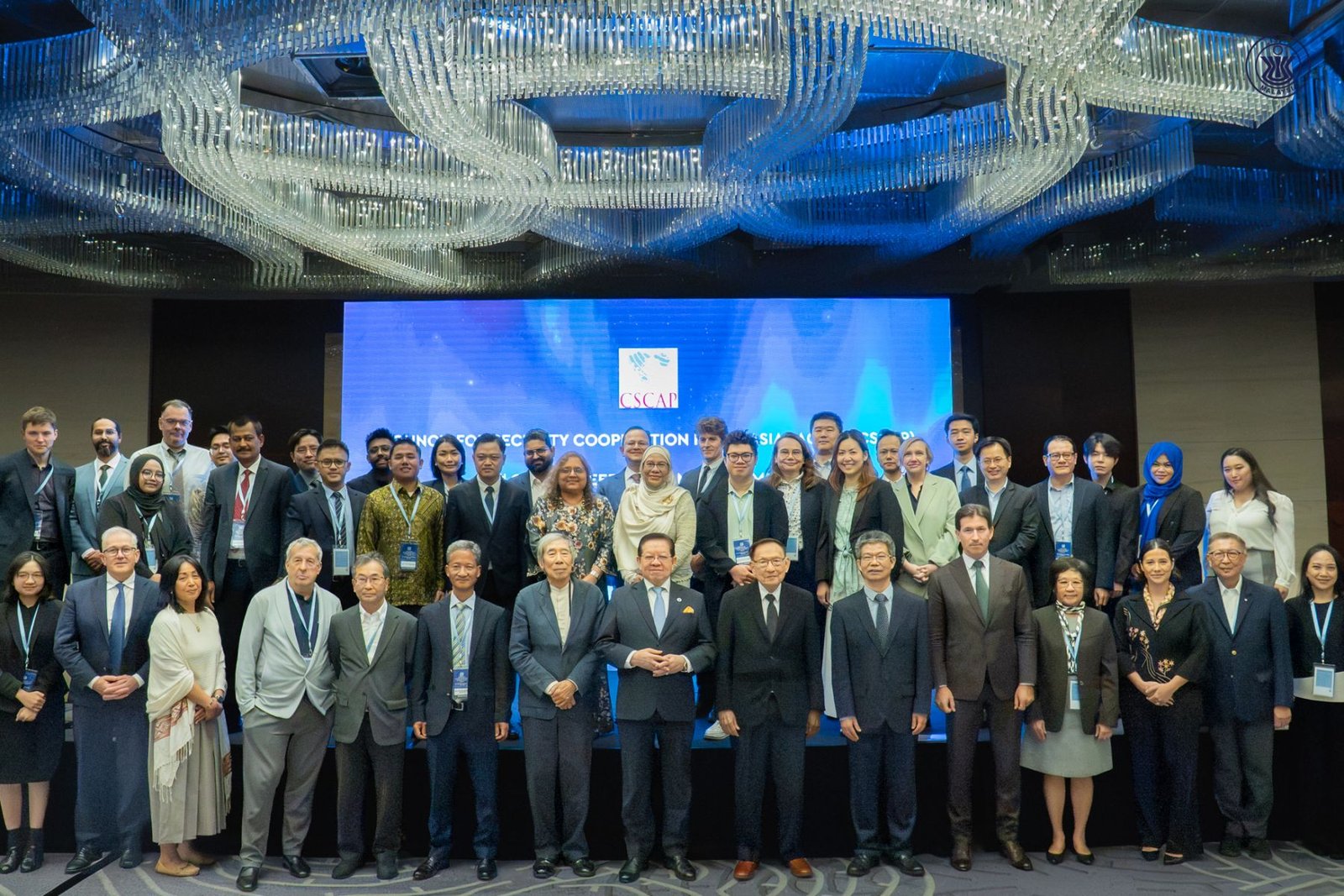
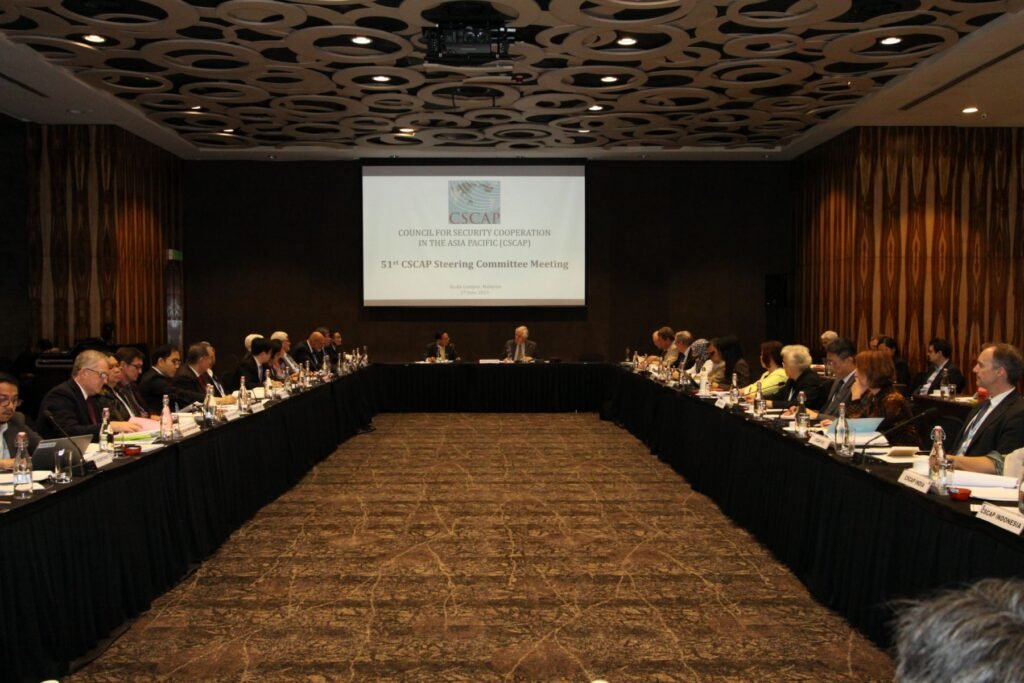
CSCAP activities are guided by a Steering Committee composed of representatives of the broad-based member committees that have been established in each of the member countries. The CSCAP Steering Committee meets twice a year – in June in Kuala Lumpur and in December in one of the other member countries. The Steering Committee is co-chaired by a member from an ASEAN Member Committee and a member from a non-ASEAN Member Committee. The current Co-Chairs are Datuk Prof Dr Mohad Faiz Abdullah (CSCAP Malaysia) and Dr Liu Qing (CSCAP China).
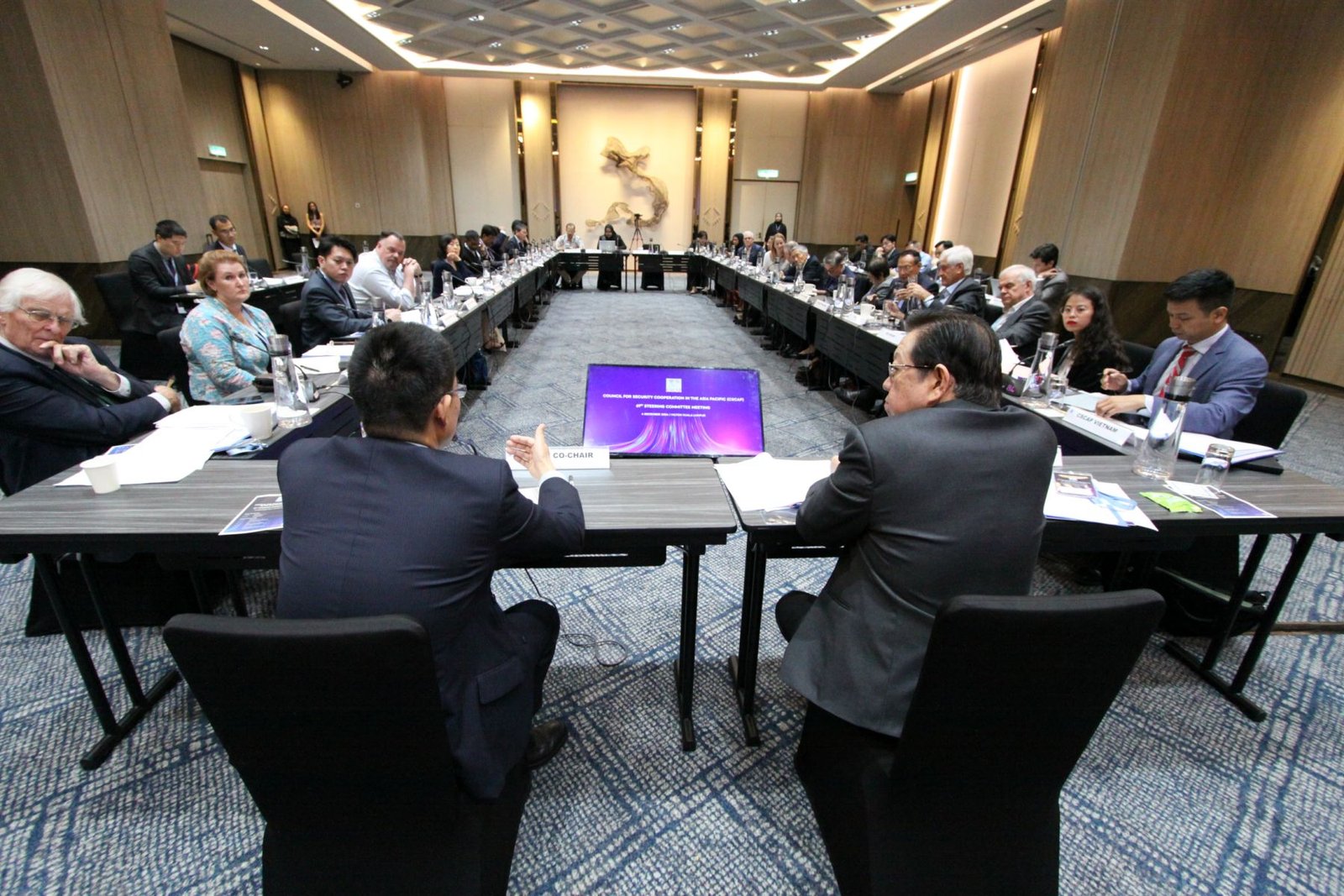
The Steering Committee is served by a Secretariat, which is currently located in Kuala Lumpur at the Institute of Strategic and International Studies (ISIS) Malaysia.

Members and Member Committees

The Council for Security Cooperation in the Asia Pacific (CSCAP) was established with research institutes from ten founding countries: the five original ASEAN member states (Indonesia, Malaysia, the Philippines, Singapore, and Thailand), Australia, Canada, Japan, the Republic of Korea, and the United States. In accordance with the CSCAP Charter, participating institutions organize themselves into national Member Committees, which serve as their respective countries’ representatives within CSCAP. Canada has since withdrawn from the organization.

CSCAP subsequently expanded its membership to include New Zealand (June 1994), Mongolia (June 1996), Vietnam (December 1996), China (December 1996), and the European Union (December 1998). India, which had held provisional membership since December 1994, became a full member in June 2000, alongside Papua New Guinea (which has since withdrawn) and Cambodia. Brunei Darussalam joined in December 2001, followed by Myanmar in June 2016 and Lao PDR in May 2018.

In addition to its formal membership, CSCAP permits experts from Taiwan to participate in its working groups as observers in their individual capacities.

CSCAP Australia

La Trobe Centre for Global Security

La Trobe University

Kingsbury Drive

Bundoora, VIC 3068

Australia

Website: www.latrobe.edu.au/asia/cscap-australia

CSCAP Brunei

Brunei Darussalam Institute of Policy and Strategic Studies

Ministry of Foreign Affairs

Jalan Subok

Bandar Seri Begawan, BD 2710

Brunei Darussalam

Website (Ministry): www.mfa.gov.bn

CSCAP Cambodia

Cambodian Institute for Cooperation and Peace (CICP)

Phum Paung Peay

Sangkat Phnom Penh Thmey

Khan Sen Sok, P.O. Box 1007

Phnom Penh 12202

Kingdom of Cambodia

Website: cicp.org.kh

CSCAP Canada (Withdrawn)

Asia Pacific Foundation of Canada

680-1066 W. Hastings Street

Vancouver, British Columbia

Canada V6E 3X2

Website: www.asiapacific.ca

CSCAP China

China Institute of International Studies (CIIS)

3 Toutiao, Taijichang

Beijing 100005

People's Republic of China

Website: www.ciis.org.cn/english

CSCAP European Union

European Union Institute for Security Studies (EUISS)

100 Avenue de Suffren

75015 Paris

France

Website: www.iss.europa.eu

CSCAP India

Indian Council of World Affairs (ICWA)

Sapru House

Barakhamba Road

New Delhi 110001

India

Website: www.icwa.in

CSCAP Indonesia

Centre for Strategic and International Studies (CSIS)

Jl. Tanah Abang III/23-27

Jakarta 10160

Indonesia

Website: www.csis.or.id

CSCAP Japan

The Japan Institute of International Affairs (JIIA)

3F Toranomon Mitsui Building

3-8-1 Kasumigaseki, Chiyoda-ku

Tokyo 100-0013

Japan

Website: www.jiia.or.jp/eng

CSCAP DPR Korea

Institute of Disarmament and Peace

Ministry of Foreign Affairs

Pyongyang

Democratic People's Republic of Korea

CSCAP Republic of Korea

Korea University

International Studies Hall, Room 542

501 Anam-dong, Seongbuk-gu

Seoul

Republic of Korea

Website (host university): www.korea.ac.kr

CSCAP Laos

Institute of Foreign Affairs

Ministry of Foreign Affairs of Lao PDR

23 Singha Road

Phonesay Village, Xaysettha District

Vientiane

Lao PDR

CSCAP Malaysia

Institute of Strategic and International Studies (ISIS) Malaysia

1 Persiaran Sultan Salahuddin

P.O. Box 12424

50778 Kuala Lumpur

Malaysia

Website: www.isis.org.my

CSCAP Mongolia

Institute for Strategic Studies

Sambuu Street 11

Central P.O. Box 870

Ulaanbaatar 15141

Mongolia

Website: en.iss.gov.mn

CSCAP Myanmar

Myanmar Institute of Strategic and International Studies (MISIS)

Ministry of Foreign Affairs

Yangon

Myanmar

Website: myanmarisis.org

CSCAP New Zealand

Centre for Strategic Studies: New Zealand

Victoria University of Wellington

P.O. Box 600

Wellington 6140

New Zealand

Website: www.wgtn.ac.nz/strategic-studies

CSCAP Philippines

WPS Foundation

Unit 505, 5th Floor

Regus Adriatico Square, Malate

Manila 1004

Philippines

Website: wps-ph.org

CSCAP Russia

Second Asian Department

Ministry of Foreign Affairs

Smolenskaya-Sennaya Square 32/32

Moscow 121200

Russian Federation

Website (Ministry): www.mid.ru

CSCAP Singapore

S. Rajaratnam School of International Studies (RSIS)

Nanyang Technological University

Block S4, Level B3

50 Nanyang Avenue

Singapore 639798

Website: rsis.edu.sg

CSCAP Thailand

Institute of Security and International Studies (ISIS Thailand)

Faculty of Political Science

Chulalongkorn University

5th Floor, Prajadhipok-Rambhaibarni Building

Bangkok 10330

Thailand

Website (host university): www.chula.ac.th/en

US CSCAP

Pacific Forum

1003 Bishop Street

Pauahi Tower, Suite 1150

Honolulu, Hawaii 96813

United States of America

Website: pacforum.org

CSCAP Vietnam

Diplomatic Academy of Vietnam

69 Chua Lang Street

Dong Da District

Hanoi

Vietnam

Website: www.dav.edu.vn/en

Associate Member

Pacific Islands Forum Secretariat

Private Mail Bag

Suva

Fiji

Website: forumsec.org